Women's Health Screenings by Age: A Checklist for Your 20s to 70s
A decade-by-decade checklist of recommended health screenings for women, including cervical and breast cancer screening, blood pressure, bone density, and more.
Key takeaways
- Cervical cancer screening generally runs from age 21 to 65, with HPV testing preferred every 5 years from age 30.
- The USPSTF recommends mammograms every 2 years for women ages 40 to 74.
- Colorectal cancer screening starts at 45, and bone density screening is recommended at 65 (or earlier with risk factors).
- Your doctor may recommend different timing based on your personal and family history.
Preventive screenings are one of the best ways to stay healthy. They can catch problems like high blood pressure, diabetes, and certain cancers early, often before symptoms appear and when treatment works best.
This checklist summarizes common screening recommendations for women with average risk, based largely on the U.S. Preventive Services Task Force (USPSTF), an independent panel of national experts. Under the Affordable Care Act, many of these services are covered without a copay by most private insurance plans.
Recommendations can differ for people with a strong family history, genetic mutations (like BRCA), or other risk factors. Always discuss your personal screening schedule with your health care provider.
Screenings for all adult women
- Blood pressure: At least every 3 to 5 years for ages 18 to 39 with normal readings and no risk factors; every year from age 40 or if at increased risk.
- Depression and anxiety: Screening during routine visits.
- HIV: At least once between ages 15 and 65, and more often if at increased risk.
- Hepatitis C: At least once for adults ages 18 to 79.
- Prediabetes and type 2 diabetes: Every 3 years for ages 35 to 70 who have overweight or obesity.
- Skin checks: Talk to your doctor about any new or changing moles.
- Dental and eye exams: Regular checkups throughout life.
Your 20s
- Cervical cancer: Starting at age 21, a Pap test every 3 years.
- Sexually transmitted infections: Chlamydia and gonorrhea screening for sexually active women 24 and younger, and older women at increased risk.
- Contraception and preconception care: Discuss family planning goals. If you could become pregnant, take 400 mcg of folic acid daily. See our guide to planning a pregnancy.
- HPV vaccine: Recommended through age 26 if not fully vaccinated; ages 27 to 45 may discuss with their provider.
Your 30s
- Cervical cancer: From age 30 to 65, options include an HPV test every 5 years (preferred by many guidelines), HPV/Pap co-testing every 5 years, or a Pap test alone every 3 years. Self-collected HPV tests have also become an option in some settings; ask your provider.
- Cholesterol: Discuss testing with your doctor, especially if you have risk factors. See cholesterol explained.
- Breast cancer risk assessment: If you have a family history of breast, ovarian, tubal, or peritoneal cancer, ask about genetic counseling.
Your 40s
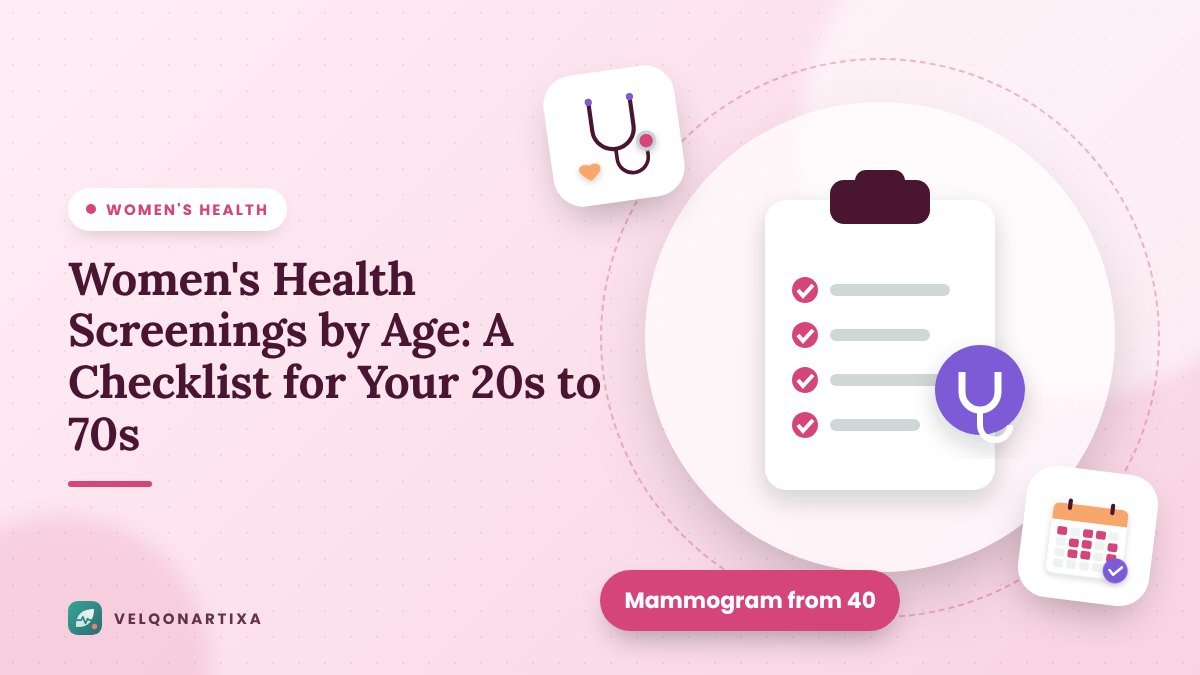
- Mammogram: The USPSTF recommends screening mammograms every 2 years from age 40 to 74. Some organizations recommend yearly screening; discuss what's best for you. Women with dense breasts may ask whether additional imaging is appropriate.
- Blood pressure: Every year.
- Diabetes: Every 3 years if you have overweight or obesity.
- Perimenopause: Talk to your provider about changes in your cycle, sleep, or mood.
Your 50s
- Colorectal cancer: Start at age 45 and continue through 75. Options include a colonoscopy every 10 years or stool-based tests (like FIT every year or a stool DNA test every 1 to 3 years). Follow-up colonoscopy is needed after any abnormal stool test.
- Mammogram: Every 2 years.
- Lung cancer: Yearly low-dose CT scan for adults 50 to 80 with a 20 pack-year smoking history who currently smoke or quit within the past 15 years.
- Menopause: Discuss symptoms and treatment options. Read our menopause guide.
- Shingles vaccine: Recommended starting at age 50.
Your 60s
- Bone density (osteoporosis): A DEXA scan starting at age 65, or earlier for postmenopausal women with risk factors. See our guide to bone health.
- Cervical cancer: Most women can stop after age 65 if they've had adequate normal screening results and are not at high risk.
- Mammogram and colorectal screening: Continue as recommended.
- Vaccines: Review recommended vaccines, including pneumococcal. See vaccines for adults over 50.
Your 70s and beyond
- Mammograms: Recommended through age 74; after that, decisions are individualized.
- Colorectal cancer: Routine screening through 75; ages 76 to 85 decide with their doctor.
- Fall risk: Ask about fall prevention and balance.
- Hearing and vision: Get regular checks.
- Medication review: Review all medicines and supplements annually. See managing multiple medications.
Quick reference table
| Screening | When to start | How often |
|---|---|---|
| Blood pressure | 18 | Yearly at 40+; every 3–5 years if 18–39 and low risk |
| Cervical cancer | 21 | Every 3 years (21–29); every 3–5 years depending on test (30–65) |
| Mammogram | 40 | Every 2 years until 74 |
| Colorectal cancer | 45 | Depends on test |
| Diabetes | 35 (if overweight) | Every 3 years |
| Bone density | 65 (earlier if at risk) | As advised |
| Lung cancer | 50 (if eligible) | Yearly |
The bottom line
Preventive screenings are a powerful way to protect your health at every stage of life. Use this checklist as a starting point, keep a record of your results, and talk with your provider about which tests are right for you and when.
Last reviewed and updated: October 4, 2026
This article is for general information only. It isn't medical advice and can't replace a visit with your doctor, pharmacist, or other licensed health professional who knows your history. Read our full medical disclaimer.