Bone Health for Women: How to Prevent Osteoporosis
Women face a higher risk of osteoporosis, especially after menopause. Learn how calcium, vitamin D, exercise, and screening help keep bones strong.
Key takeaways
- Women lose bone faster after menopause, making osteoporosis much more common in women than men.
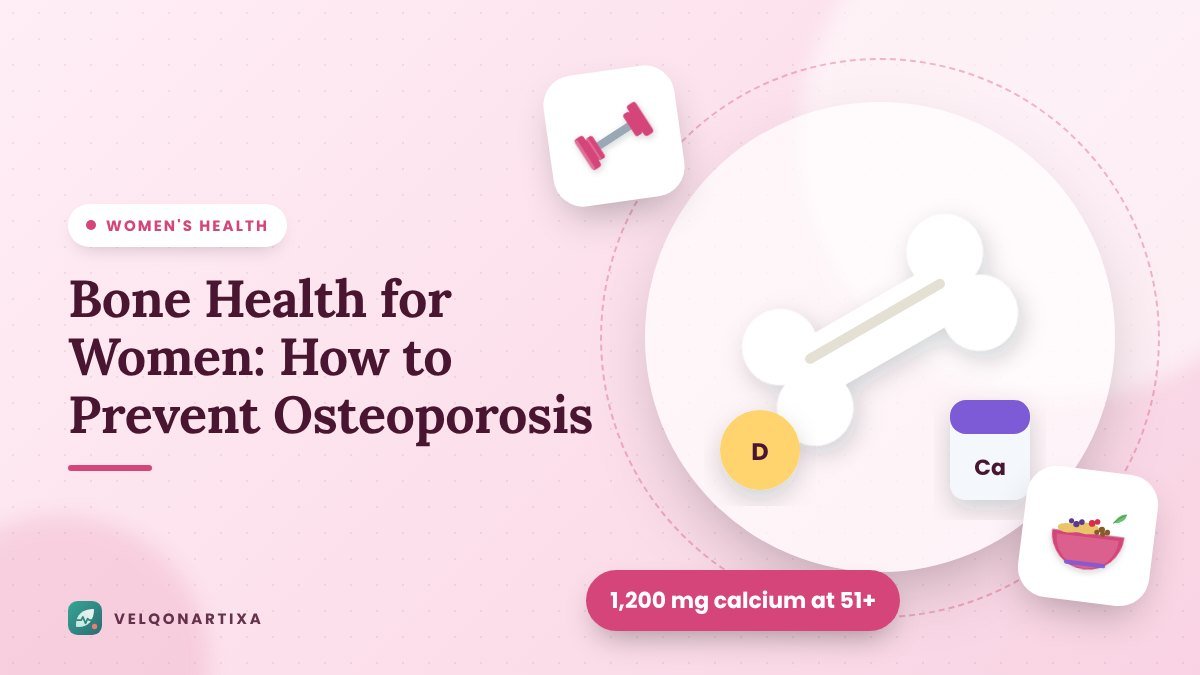
- Women 19–50 need 1,000 mg of calcium daily, and women 51+ need 1,200 mg; vitamin D needs are 600 IU (800 IU after 70).
- Weight-bearing and muscle-strengthening exercise help build and maintain bone.
- Bone density screening is recommended for women 65 and older, and younger postmenopausal women at increased risk.
Osteoporosis is often called a "silent disease" because bone loss happens without symptoms until a bone breaks. According to the Bone Health & Osteoporosis Foundation, approximately one in two women over age 50 will break a bone due to osteoporosis in her lifetime.
The good news: there's a lot you can do at every age to build and protect your bones.
What is osteoporosis?
Bone is living tissue that is constantly being broken down and rebuilt. Osteoporosis develops when bone loss outpaces bone formation, making bones thin, porous, and fragile. Fractures of the hip, spine, and wrist are most common. Hip fractures in particular can lead to loss of independence.
Osteopenia refers to bone density that is lower than normal but not low enough to be considered osteoporosis.
Why women are at higher risk
- Women generally have smaller, thinner bones than men
- Estrogen helps protect bones, and bone loss accelerates in the years around and after menopause
- Women live longer on average, giving more time for bone loss
Peak bone mass is reached by about age 30. After that, the goal is to slow bone loss.
Risk factors
Factors you can't change: female sex, older age, family history of osteoporosis or hip fracture, small body frame, early menopause, and being of white or Asian descent (though osteoporosis affects women of all backgrounds).
Factors you can change: low calcium and vitamin D intake, physical inactivity, smoking, heavy alcohol use, and very low body weight.
Medical factors: long-term use of certain medications (like glucocorticoid steroids and some seizure medications), rheumatoid arthritis, celiac disease, hyperthyroidism, and eating disorders.
Get enough calcium
Calcium is the main mineral in bone. The NIH recommends:
| Age | Calcium per day |
|---|---|
| Women 19–50 | 1,000 mg |
| Women 51+ | 1,200 mg |
Good food sources: low-fat milk, yogurt, and cheese; calcium-fortified plant milks, orange juice, and cereals; canned sardines and salmon with bones; tofu made with calcium; and leafy greens like kale, collards, and bok choy.
Try to get calcium from food first. If you can't meet your needs, talk with your doctor about a supplement. Your body absorbs calcium best in doses of 500 mg or less at a time.
Get enough vitamin D
Vitamin D helps your body absorb calcium. The NIH recommends 600 IU daily for adults up to age 70 and 800 IU for those over 70. Sources include fatty fish, fortified milk and cereals, egg yolks, and sunlight. Many people need a supplement; your doctor can check your level with a blood test if needed.
Exercise for stronger bones
Bones respond to stress by getting stronger. Two types of exercise matter most:
- Weight-bearing exercise: activities where you're on your feet working against gravity, such as brisk walking, hiking, dancing, stair climbing, and tennis.
- Muscle-strengthening exercise: lifting weights, using resistance bands, or doing bodyweight exercises at least 2 days a week. See our beginner strength routine.
Balance exercises, like tai chi, reduce your risk of falls and the fractures that can follow.
If you already have osteoporosis, avoid movements that involve deep forward bending or twisting of the spine, such as toe touches or some sit-ups. A physical therapist can design a safe program.
Other bone-friendly habits
- Don't smoke. Smoking speeds bone loss.
- Limit alcohol to no more than one drink a day.
- Eat enough protein and plenty of fruits and vegetables.
- Prevent falls by removing tripping hazards and keeping your home well lit.
Screening: bone density testing
A DEXA (dual-energy X-ray absorptiometry) scan measures bone density. It's quick, painless, and uses a very low dose of radiation.
The USPSTF recommends screening for:
- All women 65 and older
- Postmenopausal women under 65 at increased risk of fracture
Results are given as a T-score: -1.0 or above is normal, between -1.0 and -2.5 is low bone mass (osteopenia), and -2.5 or below is osteoporosis.
Treatment options
If you have osteoporosis or a high fracture risk, your doctor may recommend medication. Options include bisphosphonates (such as alendronate), denosumab, hormone-related therapies, and bone-building medications for those at very high risk. These medications can significantly reduce fracture risk.
When to see a doctor
Talk with your provider if you've broken a bone from a minor fall, lost height, developed a stooped posture, or have risk factors for osteoporosis.
The bottom line
Strong bones are built through a lifetime of good habits. Get enough calcium and vitamin D, stay active with weight-bearing and strength exercises, avoid smoking, and get screened when recommended.
Last reviewed and updated: August 7, 2026
This article is for general information only. It isn't medical advice and can't replace a visit with your doctor, pharmacist, or other licensed health professional who knows your history. Read our full medical disclaimer.