Managing Multiple Medications Safely as You Age
Taking several medications raises the risk of side effects and interactions. Learn how to manage multiple medications safely with lists, reviews, and smart habits.
Key takeaways
- Taking multiple medications (polypharmacy) increases the risk of side effects, drug interactions, and falls.
- Keep an up-to-date list of all prescriptions, over-the-counter medicines, vitamins, and supplements.
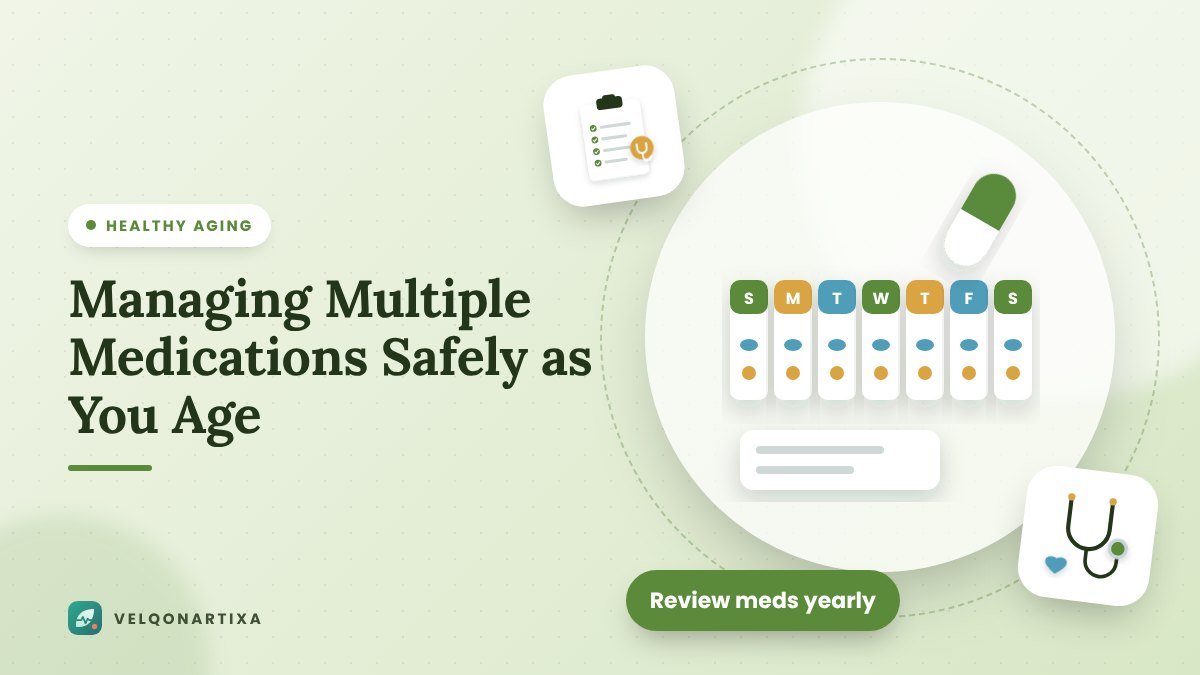
- Ask your doctor or pharmacist for a full medication review at least once a year.
- Never stop or change a medication without talking to your health care provider.
Many older Americans take several medications every day. In fact, a large share of adults 65 and older take five or more prescription drugs, and many also use over-the-counter medicines and supplements. While each medication may serve an important purpose, taking several at once, known as polypharmacy, raises the risk of side effects, interactions, and mistakes.
Here's how to manage your medications safely and confidently.
Why medication safety matters more with age
As we age:
- The liver and kidneys may process medications more slowly, so drugs can build up in the body
- Body composition changes, affecting how medications are distributed
- More health conditions often mean more prescriptions, sometimes from multiple doctors
- Side effects like dizziness and drowsiness can increase the risk of falls
Common risks
- Drug interactions: one medication may make another stronger, weaker, or cause side effects
- Drug–supplement interactions: for example, St. John's wort can affect many medications, and some supplements affect blood clotting
- Drug–food interactions: grapefruit can affect some cholesterol and blood pressure medications, and leafy greens can affect warfarin
- Duplicate medications: taking two drugs with the same active ingredient, such as acetaminophen in several cold remedies
- Prescribing cascades: a side effect of one drug is mistaken for a new condition and treated with another drug
10 steps to manage medications safely
1. Keep a complete medication list
Write down every medication you take, including:
- Prescription drugs
- Over-the-counter medicines (pain relievers, antacids, allergy and sleep aids)
- Vitamins, minerals, and herbal supplements
- Eye drops, creams, inhalers, and patches
For each, include the name, dose, how often you take it, why you take it, and who prescribed it. Keep a copy in your wallet and on your phone, and share it with every provider.
2. Ask for a "brown bag" review
At least once a year, put all your medications and supplements in a bag and bring them to your doctor or pharmacist. Ask them to check for interactions, duplicates, and anything you may no longer need.
Medicare Part D plans offer a free Medication Therapy Management (MTM) program for many people who take multiple medications. Ask your plan or pharmacist if you qualify.
3. Use one pharmacy
Filling all prescriptions at the same pharmacy helps the pharmacist catch potential interactions.
4. Understand each medication
Ask your doctor or pharmacist:
- What is this medication for?
- How and when should I take it? With food or on an empty stomach?
- What side effects should I watch for?
- Does it interact with my other medications, foods, or alcohol?
- How long should I take it?
5. Use a pill organizer
Weekly pill organizers with morning, afternoon, and evening compartments make it easier to stay on track. Some pharmacies offer pre-sorted blister packs.
6. Set reminders
Use phone alarms, medication reminder apps, or link doses to daily routines, like brushing your teeth.
7. Be careful with over-the-counter drugs
Some common OTC medications are risky for older adults:
- Antihistamines like diphenhydramine (found in many "PM" sleep aids) can cause confusion, constipation, and falls
- NSAIDs like ibuprofen and naproxen can raise blood pressure and harm the kidneys and stomach
- Acetaminophen is in many products; too much can damage the liver
The American Geriatrics Society's Beers Criteria lists medications that may be inappropriate for many older adults. Ask your pharmacist before trying a new OTC product.
8. Don't stop or change medications on your own
Stopping some medications suddenly, like blood pressure or heart medications, antidepressants, or seizure medications, can be dangerous. Talk with your provider first. If cost is a problem, ask about generics or assistance programs.
9. Ask about "deprescribing"
Sometimes medications that were once needed are no longer helpful or appropriate. Your doctor may be able to safely lower doses or stop some drugs. This process is called deprescribing.
10. Store and dispose of medicines safely
- Store medications in a cool, dry place (not the bathroom), out of reach of children and pets
- Dispose of unused or expired medications at pharmacy take-back kiosks or DEA Take Back Day events
Watch for warning signs
Contact your doctor or pharmacist if you notice:
- New dizziness, confusion, or drowsiness
- Falls
- Changes in appetite, sleep, or mood
- Stomach problems, rash, or unusual bruising
- Any new symptom after starting a medication
Call 911 or Poison Control (1-800-222-1222) if you suspect a medication overdose or serious reaction, such as trouble breathing, swelling of the face or throat, or severe confusion.
Tips for caregivers
If you help a loved one with medications, keep an updated list, attend appointments when possible, and ask the pharmacist about packaging that makes doses easier to manage.
The bottom line
Managing multiple medications takes organization, but it's essential for staying healthy and safe. Keep an up-to-date list, use one pharmacy, ask questions, and review your medications regularly with your health care team.
Last reviewed and updated: May 6, 2026
This article is for general information only. It isn't medical advice and can't replace a visit with your doctor, pharmacist, or other licensed health professional who knows your history. Read our full medical disclaimer.