Cholesterol Explained: LDL, HDL, Triglycerides, and What Your Numbers Mean
Confused by your cholesterol test? Learn what LDL, HDL, and triglycerides mean, general target ranges, risk factors, and ways to improve your numbers.
Key takeaways
- LDL ("bad") cholesterol builds up in artery walls; HDL ("good") cholesterol helps remove it.
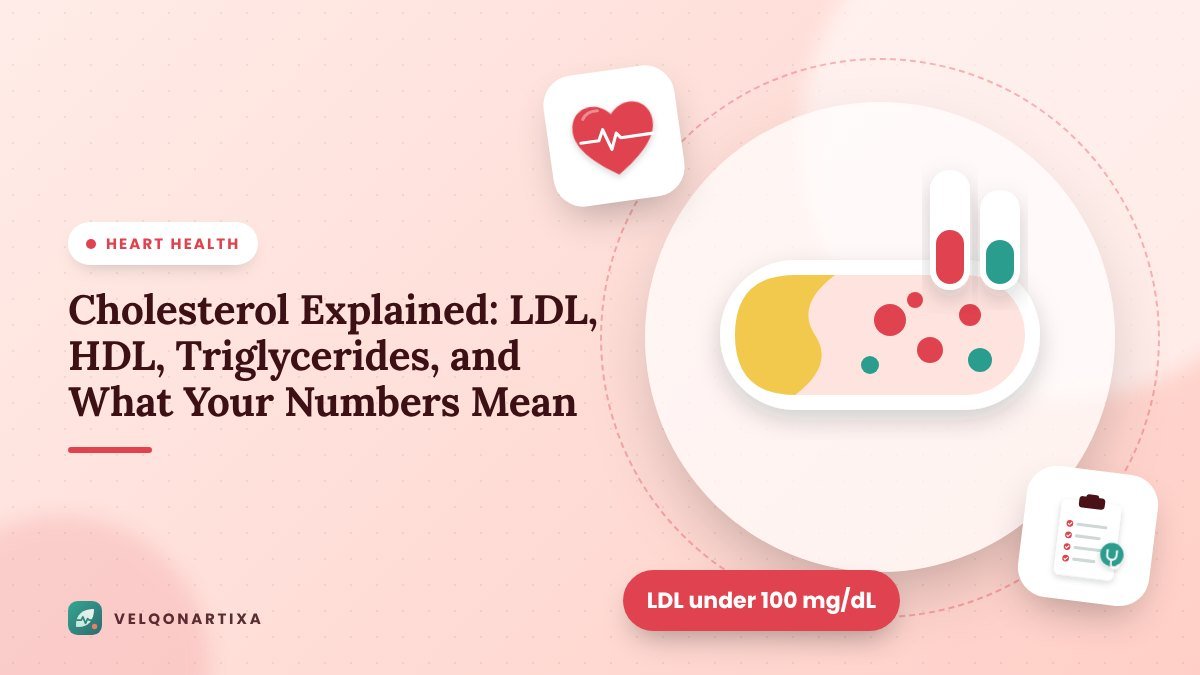
- For most adults, LDL under 100 mg/dL, HDL of 60 or higher, and triglycerides under 150 mg/dL are considered favorable.
- High cholesterol has no symptoms; a blood test is the only way to know your levels.
- Diet, exercise, weight, and not smoking all affect cholesterol, and many people also benefit from medication such as statins.
About one in four U.S. adults has high LDL cholesterol, and many people don't know it, because high cholesterol has no symptoms. Understanding your numbers can help you and your doctor take steps to protect your heart.
What is cholesterol?
Cholesterol is a waxy, fat-like substance found in every cell of your body. Your body needs some cholesterol to make hormones, vitamin D, and substances that help digest food. Your liver makes all the cholesterol you need; you also get some from animal foods.
Cholesterol travels through your blood on proteins called lipoproteins.
The main types
LDL (low-density lipoprotein): "bad" cholesterol
LDL carries cholesterol to your arteries. Too much LDL can build up in artery walls, forming plaque that narrows arteries and raises the risk of heart attack and stroke. This process is called atherosclerosis.
HDL (high-density lipoprotein): "good" cholesterol
HDL helps carry excess cholesterol back to your liver, which removes it from the body. Higher HDL levels are generally associated with lower heart disease risk.
Triglycerides
Triglycerides are a type of fat in your blood that stores excess energy from food. High triglycerides, especially combined with high LDL or low HDL, increase heart disease risk. Very high triglycerides can also cause pancreatitis.
Understanding your lipid panel
A lipid panel (or lipid profile) is a simple blood test. Here are general reference ranges for adults, in milligrams per deciliter (mg/dL):
| Measurement | Desirable | Borderline | High |
|---|---|---|---|
| Total cholesterol | Less than 200 | 200–239 | 240 or higher |
| LDL cholesterol | Less than 100 (optimal) | 130–159 | 160 or higher (190+ very high) |
| HDL cholesterol | 60 or higher (protective) | — | Less than 40 (men) or 50 (women) is low |
| Triglycerides | Less than 150 | 150–199 | 200 or higher |
These are general ranges. Your personal targets depend on your overall risk, including age, blood pressure, diabetes, smoking, family history, and whether you already have heart disease. People at high risk often have lower LDL goals.
Who should get tested?
The American Heart Association recommends that adults 20 and older have their cholesterol checked every 4 to 6 years if their risk is low, and more often if they have risk factors or are being treated. Many experts also recommend checking children once between ages 9 and 11 and again between ages 17 and 21.
Risk factors for high cholesterol
- Diet high in saturated and trans fats
- Physical inactivity
- Excess weight
- Smoking (which also lowers HDL)
- Type 2 diabetes
- Older age
- Family history, including familial hypercholesterolemia, an inherited condition causing very high LDL from a young age
How to improve your cholesterol
Eat for your heart
- Replace saturated fats (fatty meats, butter, full-fat dairy) with unsaturated fats (olive oil, avocados, nuts, fish)
- Eat more soluble fiber from oats, beans, lentils, apples, and barley
- Eat fish, such as salmon or sardines, twice a week
- Limit processed foods and added sugars, which can raise triglycerides
See our heart-healthy diet guide for more.
Move more
Regular aerobic activity can help raise HDL and lower triglycerides and LDL.
Manage weight
Losing even 5% to 10% of body weight can improve cholesterol and triglycerides.
Quit smoking
Quitting improves HDL and greatly reduces heart disease risk.
Limit alcohol
Alcohol can raise triglycerides significantly.
When medication is needed
Lifestyle changes are important, but many people also need medication, especially those with very high LDL, diabetes, existing heart disease, or high overall risk.
Statins are the most commonly prescribed cholesterol medications and have strong evidence for reducing heart attacks and strokes. Other options include ezetimibe, PCSK9 inhibitors, and bempedoic acid. Your doctor will consider your 10-year risk of heart disease when deciding on treatment.
Never stop a prescribed cholesterol medication without talking to your doctor.
The bottom line
Cholesterol numbers are a key window into your heart health. Get tested regularly, understand your results, and work with your doctor on a plan. Small, consistent changes in diet and activity, plus medication when needed, can significantly lower your risk of heart attack and stroke.
Last reviewed and updated: August 11, 2026
This article is for general information only. It isn't medical advice and can't replace a visit with your doctor, pharmacist, or other licensed health professional who knows your history. Read our full medical disclaimer.