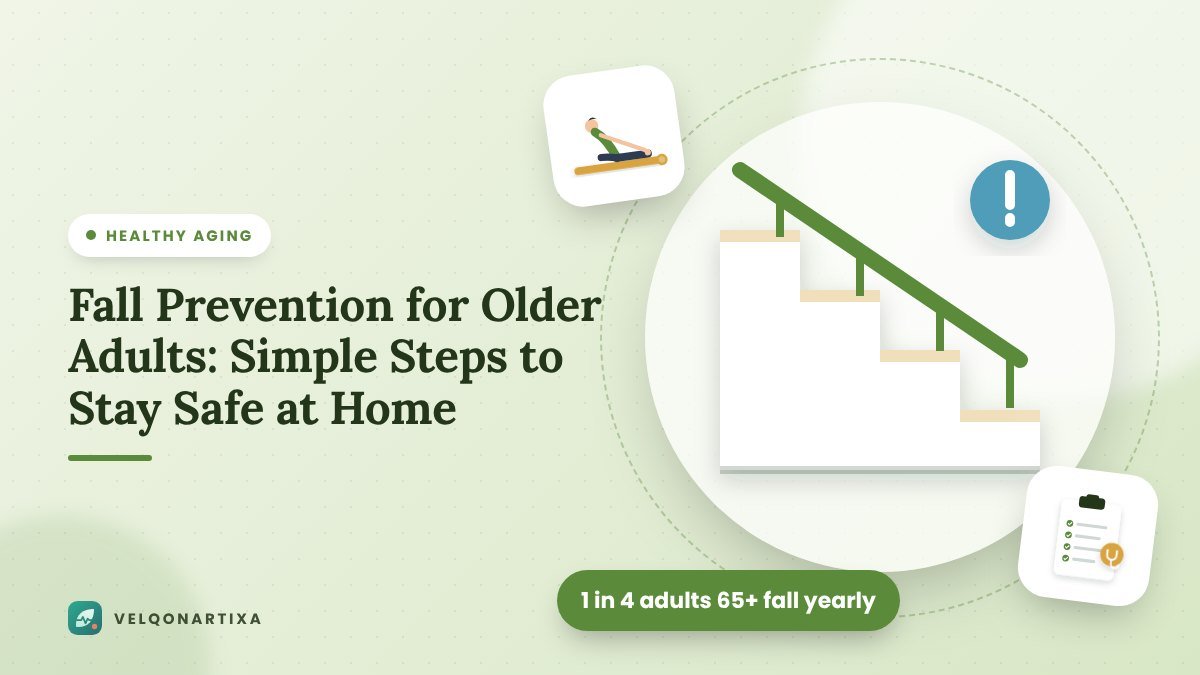
Fall Prevention for Older Adults: Simple Steps to Stay Safe at Home
Falls are the leading cause of injury among older Americans. Learn the main risk factors, a room-by-room home safety checklist, and exercises that prevent falls.
Key takeaways
- More than one in four Americans 65 and older falls each year, and falls are the leading cause of injury in this age group.
- Strength and balance exercises, like tai chi, are among the most effective ways to prevent falls.
- Review medications, check vision yearly, and make your home safer.
- Falling once doubles your chances of falling again, so tell your doctor about any fall.
Falls are not just a minor mishap for older adults. According to the CDC, more than one in four Americans aged 65 and older falls each year, and falls are the leading cause of injury and injury-related death in this age group. A fall can lead to broken hips, head injuries, and loss of independence.
But falls are not an inevitable part of aging. Many can be prevented with simple, practical steps.
Common risk factors for falls
- Muscle weakness, especially in the legs
- Balance and walking problems
- Medications that cause dizziness or drowsiness, such as sleep aids, certain antidepressants, sedatives, opioids, and some blood pressure drugs
- Vision problems
- Foot pain or poorly fitting shoes
- Home hazards, like clutter, loose rugs, poor lighting, and lack of grab bars
- Chronic conditions, such as arthritis, diabetes, Parkinson's disease, and stroke
- Low blood pressure when standing (orthostatic hypotension)
- Fear of falling, which can lead to less activity and weaker muscles
- A previous fall: falling once doubles your chances of falling again
1. Stay active with strength and balance exercises
Exercise is one of the most effective ways to prevent falls. Focus on:
- Balance training: tai chi is especially well-studied and has been shown to reduce falls
- Leg strength: sit-to-stand from a chair, step-ups, and heel raises
- Walking: builds endurance and leg strength
Simple balance exercises (hold a sturdy counter for support)
- Heel raises: rise onto your toes, then lower slowly. Repeat 10 times.
- Side leg raises: lift one leg out to the side, keeping your back straight. Repeat 10 times per side.
- Single-leg stand: stand on one foot for 10 seconds, then switch. Progress to holding on with one hand, then no hands.
- Heel-to-toe walk: walk in a straight line placing your heel directly in front of your toes.
- Sit-to-stand: rise from a chair without using your hands, then sit down slowly. Repeat 10 times.
Many community centers, senior centers, and YMCAs offer evidence-based fall prevention programs like A Matter of Balance and Tai Ji Quan: Moving for Better Balance. Call your local Area Agency on Aging to find one near you.
2. Review your medications
Ask your doctor or pharmacist to review all your medications at least once a year, including over-the-counter drugs and supplements. Some may cause dizziness or interact with each other. See our guide to managing multiple medications.
3. Get your eyes and feet checked
- Vision: get an eye exam at least once a year and update your glasses. Be careful with bifocals and multifocals when walking on stairs.
- Feet: have foot pain checked, and wear sturdy, well-fitting shoes with non-slip soles. Avoid walking in socks or loose slippers.
4. Make your home safer
Floors and stairs
- Remove clutter, cords, and throw rugs from walkways (or secure rugs with double-sided tape)
- Install handrails on both sides of stairs
- Make sure stairs are well lit, with light switches at the top and bottom
Bathroom
- Install grab bars next to the toilet and in the tub or shower
- Use non-slip mats or adhesive strips in the tub or shower
- Consider a shower chair and handheld showerhead
- Consider a raised toilet seat
Bedroom
- Place a lamp within reach of the bed
- Use nightlights between the bedroom and bathroom
- Keep a phone near the bed
Kitchen
- Keep frequently used items within easy reach
- Avoid using step stools; if you must, use a sturdy one with a handrail
5. Manage health conditions
- Stand up slowly, especially after lying down, to avoid dizziness
- Stay hydrated
- Keep up with care for conditions like diabetes, arthritis, and heart disease
- Make sure you're getting enough vitamin D and calcium for bone health
What to do if you fall
- Stay calm and take a moment to check for injuries.
- If you're not hurt, roll onto your side, get on your hands and knees, crawl to a sturdy chair, and slowly push yourself up.
- If you're hurt or can't get up, call for help. Consider a medical alert device or a smartwatch with fall detection.
- Tell your doctor about any fall, even if you weren't injured.
Call 911 if someone falls and hits their head, especially if they take blood thinners, or if they can't move, have severe pain, or seem confused.
The bottom line
Falls are common but preventable. Stay active with strength and balance exercises, review your medications, keep your eyes and feet healthy, and make simple changes at home. Talk with your doctor about your fall risk; the CDC's STEADI program gives providers tools to help.
Last reviewed and updated: September 27, 2026
This article is for general information only. It isn't medical advice and can't replace a visit with your doctor, pharmacist, or other licensed health professional who knows your history. Read our full medical disclaimer.