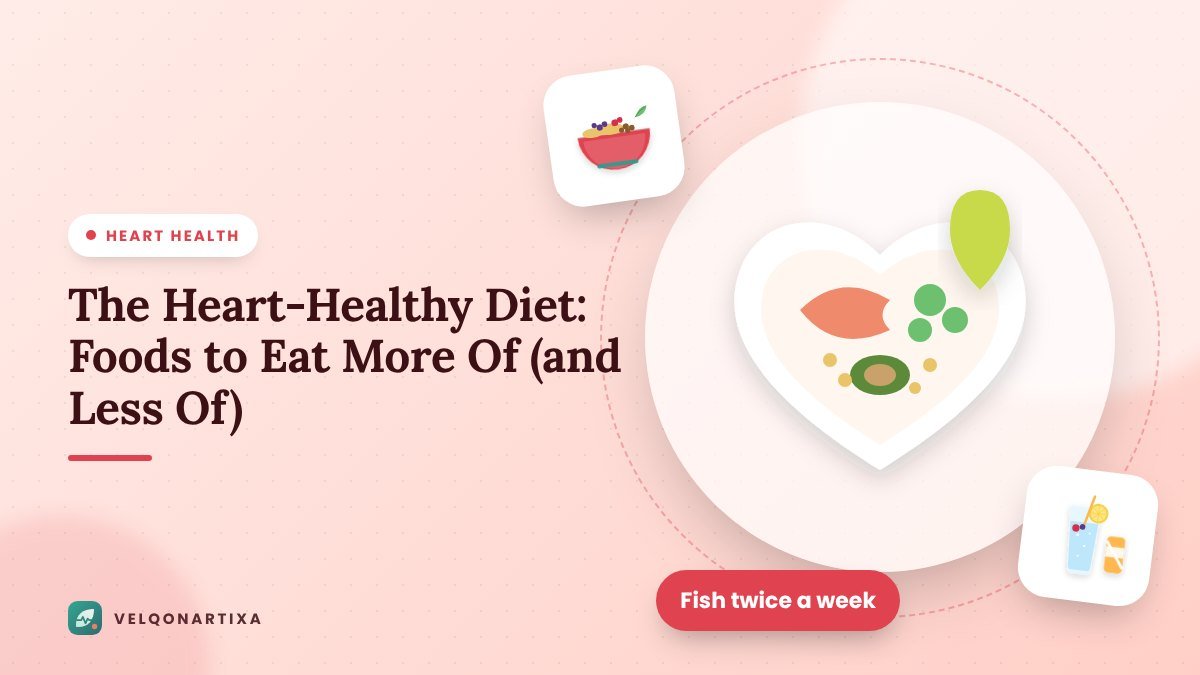
The Heart-Healthy Diet: Foods to Eat More Of (and Less Of)
Build a heart-healthy diet with this practical guide: the best foods for your heart, what to limit, Mediterranean and DASH eating patterns, and easy swaps.
Key takeaways
- Focus on overall eating patterns, such as DASH and Mediterranean-style diets, rather than single "superfoods."
- Eat more vegetables, fruits, whole grains, beans, nuts, fish, and healthy oils.
- Limit sodium, added sugars, saturated fat, processed meats, and highly processed foods.
- Small, consistent swaps can significantly lower heart disease risk over time.
Heart disease is the leading cause of death in the United States for both men and women. While genetics play a role, what you eat every day is one of the most powerful tools you have to protect your heart.
The American Heart Association emphasizes that overall eating patterns matter more than any single food. Here's how to build a heart-healthy plate.
The best-studied heart-healthy eating patterns
DASH
The Dietary Approaches to Stop Hypertension plan was designed to lower blood pressure. It emphasizes vegetables, fruits, whole grains, low-fat dairy, lean proteins, and nuts, while limiting sodium, sweets, and red meat.
Mediterranean-style
Inspired by traditional eating in countries like Greece and Italy, this pattern features vegetables, fruits, whole grains, beans, nuts, olive oil, and fish, with moderate dairy and limited red meat and sweets. Large studies have linked it with lower rates of heart attack and stroke.
Both patterns share the same core principles, so you can choose whichever fits your tastes and culture best.
Foods to eat more of
Vegetables and fruits
Aim to fill half your plate with produce. They're rich in fiber, potassium, and antioxidants. Fresh, frozen, and canned (without added salt or sugar) all count.
Whole grains
Oats, brown rice, quinoa, barley, whole-wheat bread, and whole-grain pasta provide fiber that helps lower LDL cholesterol.
Beans, lentils, and legumes
Inexpensive, filling, and packed with fiber and plant protein. Try them in soups, salads, and tacos.
Nuts and seeds
A small handful (about 1 ounce) of unsalted almonds, walnuts, pistachios, or flaxseeds several times a week supports heart health.
Fish and seafood
Aim for about two servings a week, especially fatty fish like salmon, sardines, mackerel, trout, and albacore tuna, which provide omega-3 fatty acids.
Healthy fats
Choose olive, canola, avocado, and other liquid vegetable oils instead of butter, lard, and shortening.
Low-fat dairy or fortified alternatives
Fat-free or low-fat milk and plain yogurt provide calcium and potassium.
Foods to limit
| Limit | Why | Try instead |
|---|---|---|
| Sodium | Raises blood pressure | Herbs, spices, citrus, salt-free seasonings |
| Processed meats (bacon, sausage, deli meats, hot dogs) | High in sodium and saturated fat | Fresh chicken, fish, beans |
| Saturated fat (fatty red meat, butter, full-fat cheese) | Raises LDL cholesterol | Lean proteins, olive oil, plant fats |
| Added sugars and sugary drinks | Linked to weight gain, high triglycerides | Water, sparkling water, fresh fruit |
| Refined grains (white bread, pastries) | Low in fiber | Whole-grain versions |
| Ultra-processed snacks and fast food | Often high in sodium, sugar, and unhealthy fats | Nuts, fruit, vegetables with hummus |
Easy heart-healthy swaps
- Swap white rice for brown rice or quinoa
- Choose oatmeal instead of sugary cereal
- Top salads with olive oil and vinegar instead of creamy dressings
- Use salsa or avocado instead of cheese sauce
- Replace a burger with a salmon or bean burger
- Snack on unsalted nuts instead of chips
- Flavor water with citrus or berries instead of drinking soda
- Make "Meatless Monday" a weekly habit
Cooking at home more often gives you control over sodium, fats, and portion sizes. Even one or two extra home-cooked meals a week helps.
A heart-healthy day of eating
| Meal | Example |
|---|---|
| Breakfast | Steel-cut oats with blueberries, walnuts, and cinnamon |
| Lunch | Whole-grain wrap with grilled chicken, hummus, spinach, cucumbers, and peppers; an apple |
| Snack | Plain Greek yogurt with sliced strawberries |
| Dinner | Baked salmon, quinoa, roasted Brussels sprouts with olive oil, and a green salad |
| Dessert | A small piece of dark chocolate and fresh orange slices |
What about alcohol?
The AHA does not recommend drinking alcohol for heart health. If you drink, keep it moderate: no more than 2 drinks a day for men and 1 for women, according to the Dietary Guidelines. Heavy drinking raises blood pressure and can damage the heart muscle.
Special considerations
Talk with your doctor or a registered dietitian if you have kidney disease, diabetes, or take blood thinners like warfarin, which requires consistent vitamin K intake from leafy greens. A dietitian can personalize a heart-healthy plan for you.
The bottom line
A heart-healthy diet isn't about perfection or giving up everything you love. It's about building meals around vegetables, fruits, whole grains, beans, fish, and healthy fats, while cutting back on sodium, added sugar, and processed foods. Pair it with our guides on cholesterol and sodium for a complete heart-protection plan.
Last reviewed and updated: June 14, 2026
This article is for general information only. It isn't medical advice and can't replace a visit with your doctor, pharmacist, or other licensed health professional who knows your history. Read our full medical disclaimer.