Understanding Blood Pressure Numbers: What Your Reading Means
What do your blood pressure numbers mean? Learn the categories from normal to stage 2 hypertension, how to measure at home correctly, and when to call a doctor.
Key takeaways
- Blood pressure is written as two numbers: systolic (top) over diastolic (bottom), measured in mm Hg.
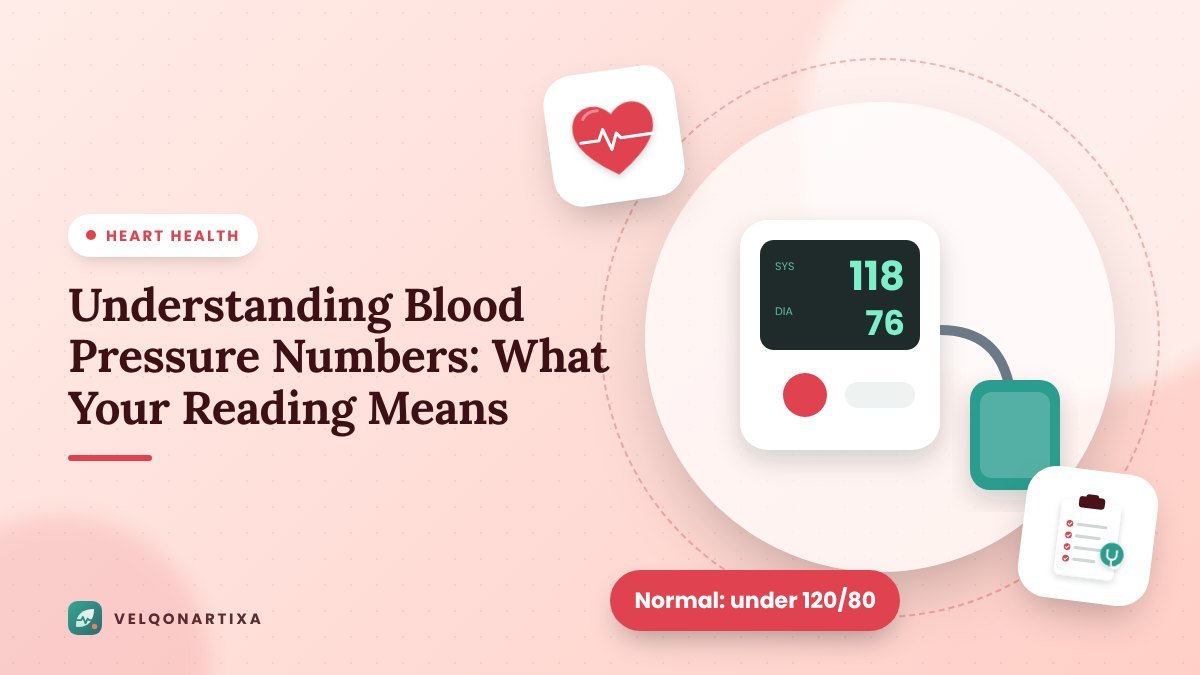
- Normal is less than 120/80; 130/80 or higher is considered high blood pressure (hypertension).
- High blood pressure usually has no symptoms, which is why regular checks matter.
- A reading above 180/120 needs prompt medical attention, and immediate 911 care if symptoms are present.
Nearly half of American adults have high blood pressure, and many don't know it. Often called the "silent killer," high blood pressure rarely causes symptoms but significantly raises your risk of heart attack, stroke, kidney disease, and dementia.
Understanding your numbers is the first step to protecting your heart.
What the two numbers mean
Blood pressure is the force of blood pushing against the walls of your arteries. It's recorded as two numbers, such as 118/76 mm Hg (millimeters of mercury):
- Systolic pressure (top number): the pressure in your arteries when your heart beats
- Diastolic pressure (bottom number): the pressure in your arteries when your heart rests between beats
Both numbers matter. After about age 50, the systolic number tends to become an especially important risk factor.
Blood pressure categories
These categories come from the American Heart Association and American College of Cardiology guidelines for adults:
| Category | Systolic (top) | Diastolic (bottom) | |
|---|---|---|---|
| Normal | Less than 120 | and | Less than 80 |
| Elevated | 120–129 | and | Less than 80 |
| Stage 1 hypertension | 130–139 | or | 80–89 |
| Stage 2 hypertension | 140 or higher | or | 90 or higher |
| Severe hypertension | Higher than 180 | and/or | Higher than 120 |
If your two numbers fall into different categories, the higher category applies. For example, 128/84 is stage 1 hypertension.
If your blood pressure is higher than 180/120, wait a few minutes and check again. If it's still that high and you have symptoms such as chest pain, shortness of breath, back pain, numbness or weakness, vision changes, or difficulty speaking, call 911. If you have no symptoms, contact your doctor right away.
Why high blood pressure is dangerous
Over time, high pressure damages the lining of your arteries, making them stiffer and narrower. This raises the risk of:
- Heart attack and heart failure
- Stroke
- Kidney disease
- Vision loss
- Cognitive decline and dementia
- Sexual dysfunction
How to measure blood pressure at home
Home monitoring helps you and your doctor see your true average blood pressure and catch "white coat hypertension" (higher readings at the doctor's office) or "masked hypertension" (normal at the office, high at home).
Choose the right monitor
- Use an automatic, upper-arm cuff monitor (wrist and finger monitors are less reliable).
- Look for a device that has been clinically validated. The website ValidateBP.org lists validated devices.
- Make sure the cuff fits your arm. A cuff that's too small can give falsely high readings.
Measure correctly
- Avoid caffeine, exercise, and smoking for 30 minutes before measuring.
- Empty your bladder.
- Sit quietly in a chair with your back supported for 5 minutes.
- Keep your feet flat on the floor, legs uncrossed.
- Rest your arm on a table at heart level, with the cuff on bare skin.
- Don't talk during the measurement.
- Take 2 or 3 readings, one minute apart, and record them all.
Measure at the same times each day, such as morning before medications and evening before dinner, and bring your log or monitor to your next appointment.
What raises blood pressure?
- Eating too much sodium (salt)
- Lack of physical activity
- Excess weight
- Drinking too much alcohol
- Smoking and vaping
- Chronic stress and poor sleep, including untreated sleep apnea
- Family history and older age
- Certain medications, such as decongestants and some pain relievers (NSAIDs)
Managing high blood pressure
Lifestyle changes can lower blood pressure significantly. Our guide to lifestyle changes that lower blood pressure covers them in detail. Many people also need medication, and that's okay. Medications are safe, effective, and often essential for preventing heart attack and stroke. Never stop taking blood pressure medication without talking to your doctor.
How often should you get checked?
The U.S. Preventive Services Task Force recommends screening for high blood pressure in adults 18 and older. Adults 40 and older, and those at higher risk, should be checked every year. Adults 18 to 39 with normal blood pressure and no risk factors should be rescreened every 3 to 5 years.
The bottom line
Knowing your numbers could save your life. Check your blood pressure regularly, learn to measure correctly at home, and work with your health care provider on a plan if your readings are high.
Last reviewed and updated: October 7, 2026
This article is for general information only. It isn't medical advice and can't replace a visit with your doctor, pharmacist, or other licensed health professional who knows your history. Read our full medical disclaimer.