Screen Time and Your Mood: How to Build a Healthier Digital Routine
Too much screen time can affect sleep, mood, and focus. Learn how to build a healthier relationship with your phone and devices using practical, realistic steps.
Key takeaways
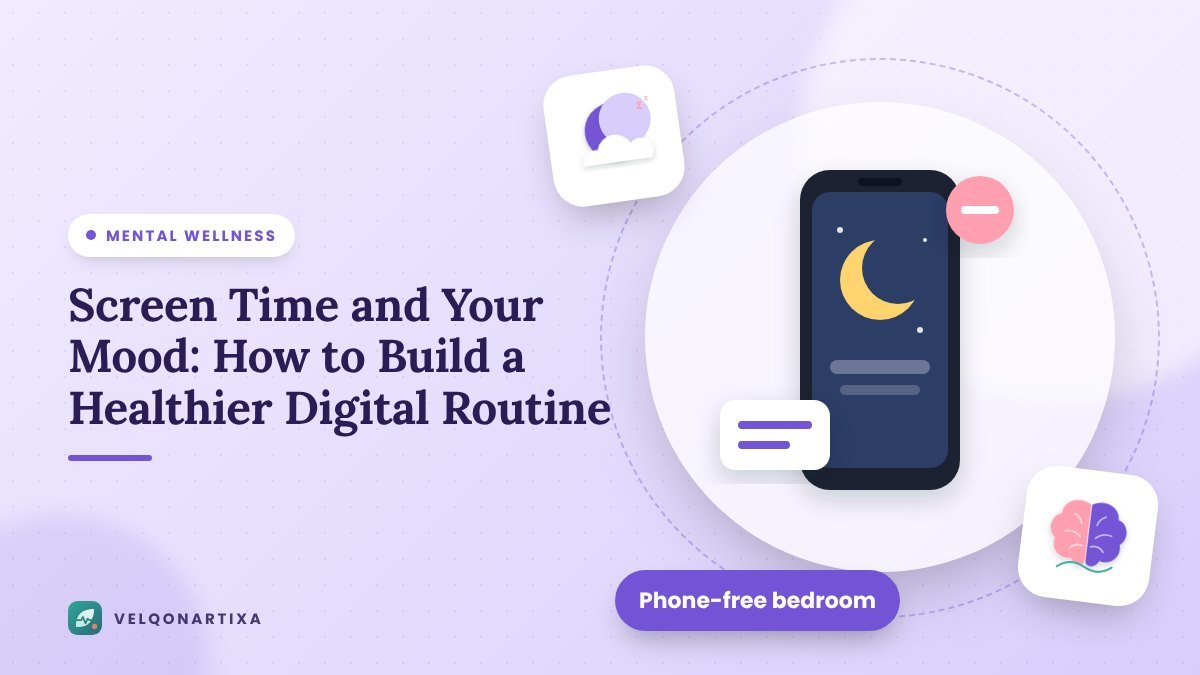
- Heavy screen use, especially late at night and on social media, is linked with poorer sleep and, for some people, lower mood.
- You don't need to quit technology; the goal is intentional use.
- Turning off nonessential notifications and creating phone-free times and places are among the most effective changes.
- Replace scrolling with activities that restore you, like movement, time outdoors, and in-person connection.
The average American checks their phone dozens of times a day, and many adults spend several hours a day on screens outside of work. Technology connects us, informs us, and entertains us. But for many people, constant scrolling leaves them feeling more tired, distracted, and anxious than before.
You don't have to throw your phone in a lake. The goal is to use technology on purpose, rather than letting it use you.
How screen time can affect your well-being
Research on screens and mental health is complex, and effects vary from person to person. Still, studies have linked heavy or problematic use with:
- Poorer sleep: Screens before bed keep your mind alert, and bright light from devices can delay the release of melatonin, the hormone that helps you feel sleepy.
- Mood and anxiety: Constant comparison on social media, doomscrolling negative news, and online conflict can worsen stress and low mood for some people.
- Attention and focus: Frequent notifications fragment attention, making deep work harder.
- Less physical activity: More time sitting with devices often means less time moving.
- Less face-to-face connection, which is important for emotional health.
Signs your screen habits may need a reset
- You reach for your phone automatically, without a reason
- You lose track of time scrolling and feel worse afterward
- You check your phone first thing in the morning and last thing at night
- Screen time is cutting into sleep, work, or relationships
- You feel anxious when you're away from your phone
10 steps to a healthier digital routine
1. Check your data
Look at your phone's screen time report (in Settings on iPhone or Digital Wellbeing on Android). Awareness is the first step.
2. Turn off nonessential notifications
Keep alerts for calls and messages from people, and turn off badges and pop-ups for social media, shopping, and games.
3. Create phone-free zones
Keep phones out of the bedroom and off the dinner table. Use a regular alarm clock instead of your phone.
4. Set a digital curfew
Power down screens 30 to 60 minutes before bed. Read a paper book, stretch, or listen to calm music instead. See our sleep hygiene guide for more ideas.
5. Don't start the day with your phone
Give yourself the first 20 to 30 minutes of the morning before checking email, news, or social media.
6. Use app limits
Set daily time limits for apps you overuse. When the limit hits, it's a cue to pause and choose.
7. Curate your feeds
Unfollow or mute accounts that make you feel anxious, angry, or inadequate. Follow accounts that inform or inspire you.
8. Make your phone less tempting
Move distracting apps off your home screen, log out of social media after each use, or try grayscale mode.
9. Replace, don't just remove
Plan what you'll do instead of scrolling: take a walk, call a friend, cook, garden, or work on a hobby.
10. Schedule regular breaks
Try a screen-free Saturday morning or a weekend afternoon outdoors.
Try the "pause and ask" habit: before unlocking your phone, ask yourself, "What am I here to do?" If there's no clear answer, put it down.
Tips for families
Kids learn screen habits from adults. Consider a family media plan with tech-free meals, device charging stations outside bedrooms, and shared screen-free activities. The American Academy of Pediatrics offers a free online Family Media Plan tool.
Don't forget the eyes
Long screen sessions can cause digital eye strain: dry eyes, blurry vision, and headaches. Follow the 20-20-20 rule: every 20 minutes, look at something 20 feet away for 20 seconds.
When to get help
If you can't cut back despite wanting to, or if screen use is tied to persistent sadness, anxiety, isolation, or sleep problems, talk with your doctor or a mental health professional. They can help address underlying issues. For support any time, call or text 988.
The bottom line
Technology is a tool, and like any tool, it works best when you use it with intention. Small changes, like turning off notifications and keeping phones out of the bedroom, can make a noticeable difference in your sleep, focus, and mood.
Last reviewed and updated: July 20, 2026
This article is for general information only. It isn't medical advice and can't replace a visit with your doctor, pharmacist, or other licensed health professional who knows your history. Read our full medical disclaimer.